Shake, Drip, Then Settle: A Winter Audit of London Road Pub Doorways
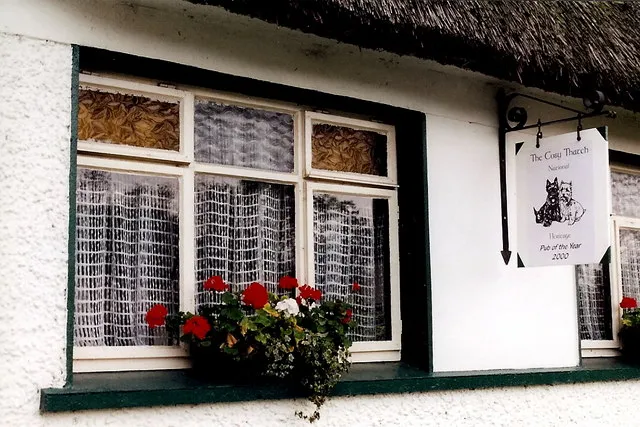
Photo: Joseph Mischyshyn, CC BY-SA 2.0, via Wikimedia Commons
There's a particular sound London Road makes in November: a bus hissing past a flooded gutter, then the wet slap of a coat being wrestled off in a doorway. It's the second sound that matters. Because everything a pub believes about hospitality is decided in the thirty seconds before you've said a word to anyone.
Nobody chooses a pub on coat hooks alone. But plenty of us quietly downgrade one on the strength of a dripping anorak and a puddle of our own making, and I think that's fair. Beer is the headline. The doorway is the handshake.
The Hook Nobody Ever Sizes Properly
Coat hooks are cheap and almost universally installed by someone who has never worn a coat. Walk into a pub and look up: if the hooks are level with your face, the next person's wet sleeve is going to introduce itself to your neck. Too low, and your coat concertinas onto the floor to be trodden into the carpet.
The good ones sit at roughly shoulder height for an average adult — high enough for a long coat to hang clear, low enough that you aren't reaching over someone's head with a dripping sleeve. The great ones come with a shelf above and a rail beneath. The truly great ones are on a wall that isn't the one behind your seat, so you aren't wearing your own damp coat like a scarf for two hours.
Points, also, for more hooks than there are seats at the bar. There is nothing lonelier than standing in a busy pub holding a wet coat.
The Umbrella Question, Settled
London Road has roughly four types of umbrella storage and only one of them is acceptable.
There's the proper stand with a solid base and a drainage well — that's the standard-bearer. There's the wicker basket, which starts the evening as furniture and ends it as a small swamp. There's the loose pile by the door, which is really a hostage situation. And then there's the pub that simply pretends umbrellas don't exist, which is where you end up carrying a dripping black cudgel to the bar and apologising to a stranger's shoes.
An umbrella stand costs less than a round for four. If a pub can keep a decent guest ale on and can't manage a bucket, I'd gently suggest the priorities have gone sideways.
Radiator Real Estate and the Unwritten Queue
Here's the winter rule I'll defend to the last: a radiator in a pub's front room is communal property, not a drying rack. There's a hierarchy. First comes the person who came in soaked. Then the person who came in soaked and brought a dog. Then everyone else.
The pubs that get this right tend to do the same small things. They leave the bench nearest the radiator free rather than stacking it with crates. They don't drape a wet tea towel over the best spot. And best of all, they keep a folded towel on the radiator shelf — not for you, particularly, just there, in case.
If you've ever sat with your back against a warm radiator, a pint going cool in your hand and the rain still hammering the window, you know this is not a small thing. It's roughly forty per cent of why anyone goes to the pub in winter at all.
The Towel Behind the Bar
Now the dogs. London Road is a dog street, and a wet dog in a pub is a test of character on both sides of the bar.
The signal that a pub actually wants dogs, rather than tolerating them for Instagram, is a bar towel that appears without being asked for. Not a teatowel from the kitchen, not a shrug — a towel, handed over, with a comment about the weather. Add a water bowl that gets refilled before you have to mention it, and you've found a pub with its house in order.
What you don't want is the sad middle ground: a jar of dog biscuits and a floor that nobody's mopped since the lunchtime rush. Biscuits are a gesture. A towel is a policy.
The Mat Is the Tell
The doormat is the most honest object in any pub. A good coconut mat, wider than the door, sitting flush and replaced when it starts curling at the corner. A bad one is an A4 rectangle that surrenders on the first wet Tuesday.
Watch for the permanent yellow 'wet floor' sign. Once it lives out all winter, it's stopped being a warning and started being a confession. Somewhere between the back door and the cellar, someone has given up.
A Doorway League, Loosely Applied
I'm not going to name and shame half of London Road over a coat hook, and I'd rather praise the fixers. But the patterns are recognisable enough to sketch.
- The old-school corner boozer. Hooks everywhere, all the wrong heights. Umbrella situation: chaotic. Radiator: scorching and jealously guarded. Towel for the dog: yes, without asking. Scores generously, because warmth beats tidiness.
- The scrubbed-up dining pub. A proper stand by the door, a mat that cost money, and hooks placed by someone who thought about it. But the radiator's behind a table you can't book. Beautiful, slightly chilly.
- The station-side quick-pint place. No hooks, no stand, no mat, no time. In and out. Nobody's expecting you to stay, and honestly the economics agree.
- The brewhouse end of the street. Where it should be done properly, and mostly is — the towel on the radiator, the stand by the door, the bench kept clear. Small things, done weekly, that make a wet Wednesday feel like a plan rather than a punishment.
What It Actually Adds Up To
None of this is expensive. A rail of hooks, a bucket, a mat, a towel. Call it the price of half a keg, once, and then almost nothing to keep up.
But kindness at the door does something a beer list can't. It tells you the people running the place have pictured you arriving — soggy, early, with a dog and a bad mood — and made a small arrangement for it. A pub that treats a dripping punter as a guest rather than a puddle has already earned the second round.
The beer still has to be right. It always does. But when the rain comes sideways off the London Road at half five in November, I know which door I'm pushing first — and it isn't the one with the best tap list. It's the one with a spare hook and a warm bench.