The Pastry Compass: Finding the Right Pint for Every London Road Pie
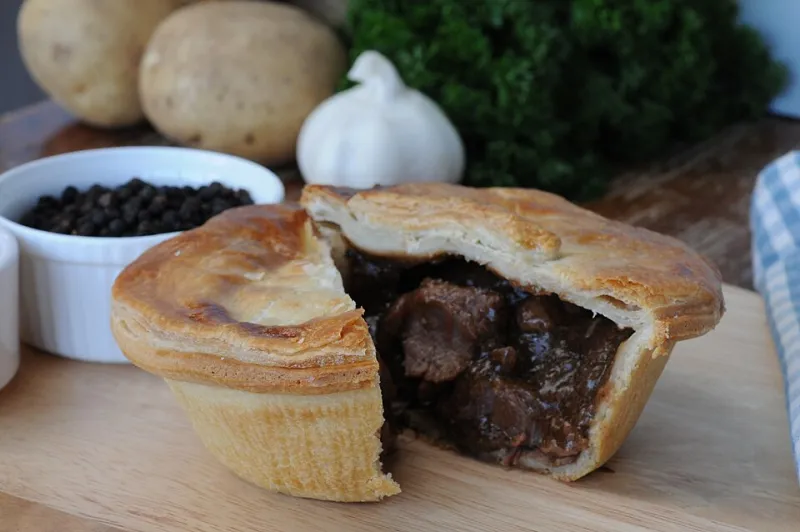
Photo: Goddards Pies Limited, CC BY-SA 4.0, via Wikimedia Commons
A pie and a pint is one of the few pub combinations that needs no explanation. It is not a trend, a small plate, or a thing to photograph from above. It is pastry, filling, gravy, and beer. Yet people still get the pairing wrong. They order a triple-hopped IPA with a chicken pie and wonder why the whole thing tastes like washing-up liquid and regret. They order a sweet stout with cheese and onion and wonder why the cheese has disappeared. The problem is not the pie. It is the alignment.
This is not wine-list theatre. You do not need a sommelier's oath to match a pie to a pint. You need three dials: weight, bitterness, and gravy intensity. Get those roughly right and the pub does the rest.
The three dials
Weight is the first. A steak and ale pie is a heavy plate: dense meat, thick gravy, pastry that means business. It wants a beer with some body, but not one that fights back. A chicken and mushroom pie is lighter, creamier, more delicate. It wants a beer that can lift rather than smother. Cheese and onion sits somewhere in between, sharp and salty, with a pastry case that can take a bit of cut.
Bitterness is the second. Think of it as cutlery. A little bitterness slices through fat and resets the palate. Too much and it scrapes the flavour off the plate. A best bitter with a steak pie is a joy because the hops clear the gravy without drowning the beef. A double IPA with the same pie is a shouting match.
Gravy intensity is the third. This is about salt, savouriness, herbs, and the way the filling lingers. A deep, reduced gravy can handle a darker beer with roasted notes. A creamy white wine sauce wants something brighter. A cheese and onion pie, all sharp cheddar and pickled onion, wants a beer that stays out of the way and lets the filling speak.
The alignment chart
| Pie | What is on the plate | Best pint style | London Road shout | Avoid |
|---|---|---|---|---|
| Steak and ale | Deep gravy, beef, thyme, shortcrust | Best bitter or dark mild | London Road Best | Hop-forward IPA |
| Chicken and mushroom | Cream, tarragon, light pastry | Golden ale or session pale | First Light | Imperial stout |
| Cheese and onion | Sharp cheddar, onion, salty pastry | Crisp pilsner or session IPA | Railway Pils | Sweet stout |
The chart is not scripture. It is a starting point. If the steak pie comes with a particularly stout-heavy gravy, a dry Irish-style stout can work beautifully. If the chicken pie is heavy on mushrooms and cream, a bitter with a bit of malt can be better than a pale. The point is to match weight to weight, use bitterness as a tool, and let gravy intensity guide the finish. A good pairing is a conversation, not a chorus.
Three pairings to order tonight
The first is steak and ale with London Road Best. This is the classic for a reason. The biscuit malt in the bitter meets the gravy halfway, and the hops tidy up the fat without erasing the beef. It is the pub equivalent of a firm handshake.
The second is chicken and mushroom with First Light. The golden ale's gentle citrus and lively carbonation cut through the cream and stop the pie from feeling heavy. It is a pairing that makes a midweek tea feel like a decision you made on purpose.
The third is cheese and onion with Railway Pils. The pilsner is crisp and clean, with enough bitterness to handle the salt and enough fizz to lift the pastry. It does not compete with the cheese. It gives it a stage.
If you only have time for one pie and one pint, order the steak and ale with the best bitter. It is the safest bet on the board and the one most likely to make you want another. If you are unsure, order a half of the beer first. A half is a cheap way to avoid a whole pint of regret.
In defence of the pie
The pie is the most honest plate in the pub. A burger can hide behind sauce. A salad can hide behind dressing. A pie cannot hide anything. The pastry tells you whether the kitchen can handle fat and heat. The filling tells you whether they understand seasoning. The gravy tells you whether they are paying attention. If the bottom is soggy, everyone knows. If the gravy is thin, there is no rescue. That is why a good pie feels like a small victory.
It is also a democratic plate. You do not need to share it. You do not need to explain it. It comes with a pint and a bit of mustard, and it asks nothing more of you than a bit of patience while it cools. In a world of small plates and twelve-ingredient sides, that is worth something.
So next time you are at the Brewhouse, do not treat the pie list as a lucky dip. Look at the crust. Think about the gravy. Choose a pint that can meet it. Crust, gravy, hop. In that order.