Leave the Fruit in the Bowl: A London Road Case Against Pint Garniture
Photo: Andy Li, CC0, via Wikimedia Commons
There is a moment, somewhere between ordering and the first sip, when a good pint can still be ruined. It is not the pour. It is not the cellarman. It is the hand that appears over the glass with a wedge of lemon and the confident air of someone doing you a favour.
I have nothing against fruit. I eat it. I put it in crumbles. But a pint of well-kept bitter is a finished product, and finishing it a second time with a garnish is a bit like putting a bow on a hammer.
This is not nostalgia for a golden age of plainness. It is a simple argument: garnish should be a decision, not a default. So let us make some decisions.
Where the habit actually came from
To be fair to the wedge, it did not arrive by accident. Through the 1990s and 2000s, the rise of cold, hazy, wheat-forward beers brought a genuine pairing logic with it — a slice of orange on a witbier is not an insult, it is a serving suggestion from the brewery itself. Somewhere along the line, though, that logic leaked. It jumped from a specific beer style to anything pale, then to anything in a branded glass, then to a lime on a lager that had done nothing to deserve it.
By the time sugar rims and herb sprigs turned up, the garnish had stopped being about the beer and started being about the photograph of the beer. Which is, I think, the honest accusation here: most of this is theatre for the camera, not the palate.
The London Road garnish code, 2026 edition
Four rules. They fit on a beer mat and they will save you an argument at the bar.
1. If the brewer says so, it stays. A traditional witbier, a radler, a fruit-forward sour built around citrus — if the recipe is genuinely asking for it, fine. The test is whether the beer tastes incomplete without it. Most do not.
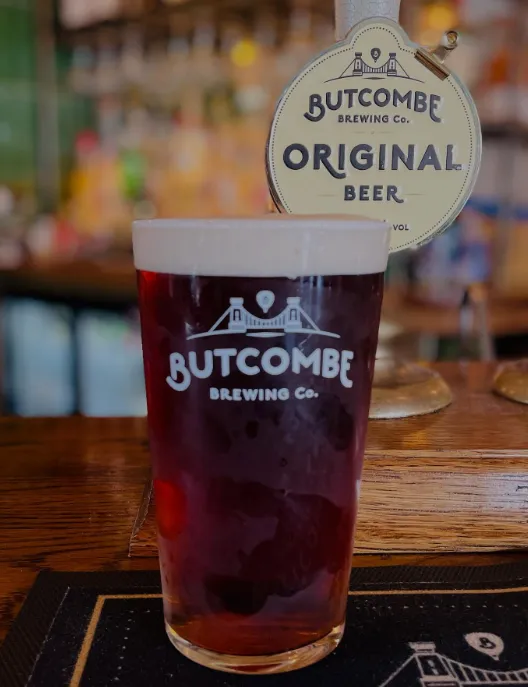
2. Never on a cask pint. Not once, not ever, not even if the pump clip has a picture of an orchard on it. Cask ale is a living thing that has already been fussed over by someone who knows more than either of us. Leave it alone.
3. No garnish that changes the glassware. Sugar rims, salt rims, dustings and drizzles are a cocktail habit wearing a beer-glass costume. If I wanted a rim I would have ordered something with a name and an umbrella.
4. A garnish must be removable without loss. This is the quiet one that does the most work. If the slice has already flavoured the beer, dripped down the outside and stuck to the coaster before it reached the table, the damage is done. A wedge you can lift off cleanly is a garnish. A wedge that has been shoved into the liquid is a hostage situation.
Field notes: five serves that need a word with themselves
I have spent a few evenings conducting what I am generously calling research. Ranked from "mildly irksome" to "please stop", here is what London Road is currently serving.
5. The mint sprig on a pale ale. Least offensive, because mint at least smells like something that grew in the ground. It contributes nothing, wilts within four minutes and leaves a small green corpse on the table. Harmless, but pointless.
4. The lime wedge on a perfectly good lager. The lime is not the problem. The problem is the assumption — the barman deciding, on your behalf, that the beer needs a personality. Ask for it off and you get a look as though you have turned down a gift.
3. The lemon on a hazy pale. This one has a following, which makes it worse. The citrus oils flatten the softness the brewer worked to build. What is left is a pint that tastes like it has been squeezed over a salad. If the beer already tastes of grapefruit, adding grapefruit is not doubling down, it is shouting over someone.
2. The sugared rim on anything. A rim is a commitment to a whole different drink. Halfway through your second, the sugar has migrated down the glass, your fingers are sticky, and the last third of the pint tastes of a fairground. There is no version of this I want to drink twice.
1. The cherry on a dark fruit beer. The outright winner, and the only entry that made me put the glass down. A glacé cherry is not a garnish, it is confectionery. It sat there in the foam like a small red buoy, contributing a marzipan sweetness that fought the roast the entire way down. I finished it out of politeness and then had to have a word with myself.
How to ask without making it a thing
Here is a small script. It works, it is polite, and it saves everyone the performance.
"Just the beer, thanks — no fruit."
That is it. No lecture. If you want to soften it, add "I know, I'm fussy" and the barman will laugh and think nothing of it. Hospitality is not a battle; it is a series of small requests handled well. Nobody in the history of the London Road has ever been barred for declining a lemon.
The one exception I will defend to the end
There is a long lunch in high summer, when the sun has got over the buildings and the pint in front of you is a proper witbier, cold and cloudy, and someone puts a thin slice of orange on the rim without asking. And it is, genuinely, lovely.
That is the whole point. The garnish is not the enemy. The default is the enemy.
So this is the manifesto, and it is a modest one: make the beer the thing people talk about, not the fruit. Keep the lemon in the bowl. Let a well-poured pint arrive looking like exactly what it is — a job done properly, by someone who could not improve it and did not try.
Order the round. Skip the ceremony. That is the London Road way.