The Bar Tab Is the Answer Sheet: Winning London Road Quiz Nights Before Question One

Photo by Photo by Kristina Tochilko on Unsplash on Unsplash
There is a moment, usually about seven minutes before the first question, when a quiz team reveals exactly how the night will go. One person is waving a card at the bar while three others argue about whether they need a fourth pint. Someone has brought a pen but no spare. Someone else has already said, “I’m rubbish at sport, but I’m good at flags.” And the quizmaster is tapping a microphone that does not need tapping.
You can learn a lot about a team from that moment. More than you can from their answer sheet, anyway.
The first round is poured, not written
A pub quiz is not an exam. It is a social event with a score attached. The teams that treat it like an exam — hushed voices, laminated revision notes, a captain who insists on reading every question twice — tend to do fine. The teams that treat it like a night in the pub tend to do better, because they are still speaking to each other by round four.
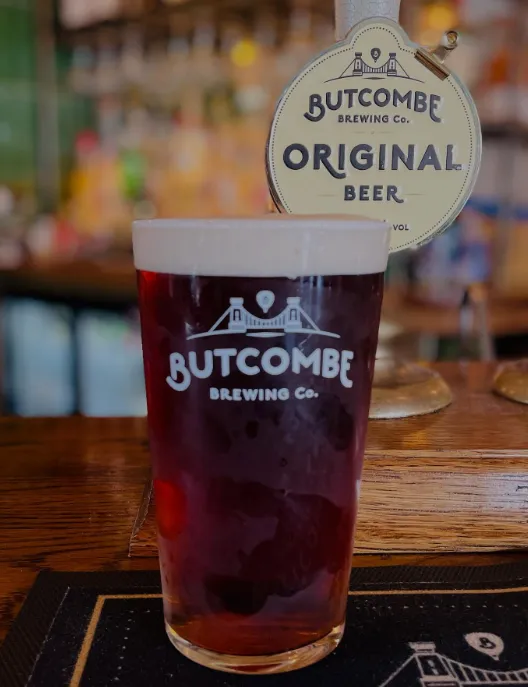
The first round should be ordered with the same care as a Sunday lunch. Not because the beer contains secret knowledge, but because a bad first round makes everything after it harder. A tray of heavy, hop-forward IPAs at 7pm is a rookie move. By the wipeout round, half the table is too full to think and the other half is too sleepy to care. A clean, sessionable bitter or a crisp lager keeps the evening in the sweet spot: sharp enough for the dingbats, gentle enough for the tie-breaker.
And please, order water. Not as a gesture. As a tactic. The team that remembers water is the team still standing when the quizmaster announces a sudden-death round on British rivers.
Four to six is the magic number
Quiz teams are like sharing boards. Too few people and you run out of answers. Too many and everyone assumes someone else knows the capital of Mongolia.
Four is the minimum for a serious run at the prize. Six is the comfortable maximum. Anything above six and you have stopped being a team and started being an audience with opinions. You also make the bar queue longer, which is not a crime, but it is not helpful either.
The ideal line-up is not six general knowledge machines. It is one person who knows music, one who knows sport, one who knows the difference between a country and a capital, and one who can keep the answer sheet legible. If you have a fifth, make them the bar runner. If you have a sixth, make them the person who remembers the team name when the quizmaster asks for it. You would be surprised how often that fails.
The half-time pint is a decision, not a reflex
Half-time is where quiz nights are quietly lost. The questions stop, the glasses empty, and everyone looks at each other as if the bar might come to them.
It will not.
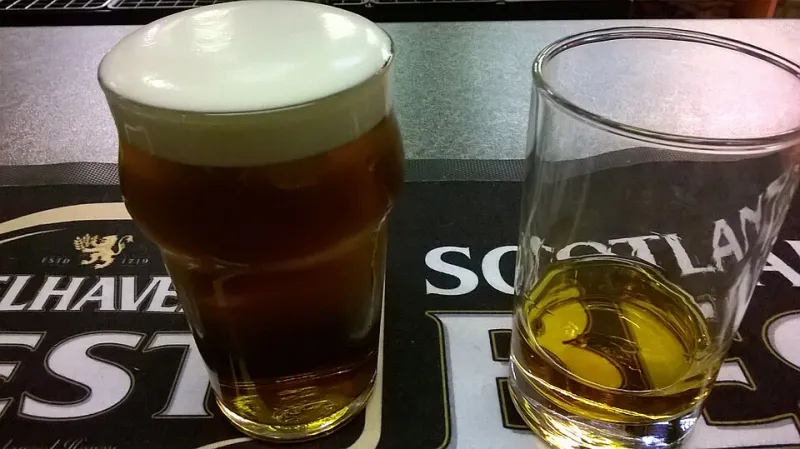
The half-time order should be placed before the picture round, not after. One person goes, one person carries, and the table agrees on the shape of the round in advance. If you are having another pint, have it now. If you are switching to something darker, make sure it is not a stout that needs a nap. If you are ordering food, order it in the same trip, because a chip-based rescue mission at round five is nobody’s finest hour.
We are not saying a quiz is won at the bar. We are saying it is very often lost there, in a fog of unclaimed glasses and a table that cannot agree on who is paying.
The ideal quiz-night menu
The best quiz food is quiet, shared, and easy to eat with one hand while the other holds a pen. That rules out anything that requires a knife and fork, a full explanation, or a bib.
A proper Scotch egg is close to perfect: sturdy, portable, and not so large that it slows down the brain. A bowl of chips with a decent aioli is the people’s choice. A pie is fine if it is a half-time pie and not a main-event pie; you want something that settles the table, not something that puts half the team into a post-lunch coma.
Avoid crisps in noisy bags. Avoid anything with a dipping sauce that demands negotiation. And avoid the temptation to order a sharing platter at 9:15pm. The quiz is nearly over. You do not need a second dinner. You need to remember what year the Battle of Hastings was.
Tie-breaker etiquette, or how not to be that table
Tie-breakers bring out the worst in people. The captain starts speaking in a whisper. Someone else starts answering over them. The quizmaster asks for one answer and gets four. It is not a good look.
One voice per team. That is the rule. The captain speaks, or the person the captain nominates. Everyone else writes it down if they must, but the answer that reaches the quizmaster’s ears should be singular. If you are wrong, you are wrong. Do not appeal to the room. Do not ask for a recount. Do not explain why your answer was technically more correct, unless the quizmaster specifically invites a debate and has the patience of a saint.
And when it is over, buy the quizmaster a drink. Not during the quiz. Not as a bribe. After. It is a long night on the other side of the microphone, and a pint is a decent way to say thank you for not asking another question about football stadiums.
A short ranking of London Road quiz formats worth your Tuesday or Thursday
1. The five-round stalwart. General knowledge, picture round, music round, dingbats, wipeout. No gimmicks, no theme, no nonsense. It is the quiz equivalent of a well-kept bitter: unshowy, reliable, and exactly what you want on a weeknight. This is the format that rewards a balanced team and a well-timed half-time pint.
2. The picture-heavy Tuesday. Maps, album covers, obscure flags, close-up shots of things that could be either a bridge or a bit of kitchen equipment. It is more fun than it sounds, and it suits teams who are stronger on recognition than recall. Order something crisp and get there early.
3. The charity quiz with a raffle. Slightly chaotic, often long, frequently brilliant. The questions are not the point. The point is the room. Go with a generous team, not a competitive one, and accept that the raffle will take longer than the final round.
4. The over-complicated themed quiz. Occasionally fun, rarely relaxing. If the quizmaster is wearing a costume and the rules take longer than the first round, you are not at a quiz anymore. You are at an immersive experience with a score sheet. Fine once in a while. Not every Thursday.
The last word
A good quiz night is not about proving you know things. It is about proving you can sit in a London Road pub with five other people, order sensibly, share a bowl of chips, and still like each other when the music round turns out to be all 1990s indie B-sides.
The bar tab is the answer sheet. Pour it well.